
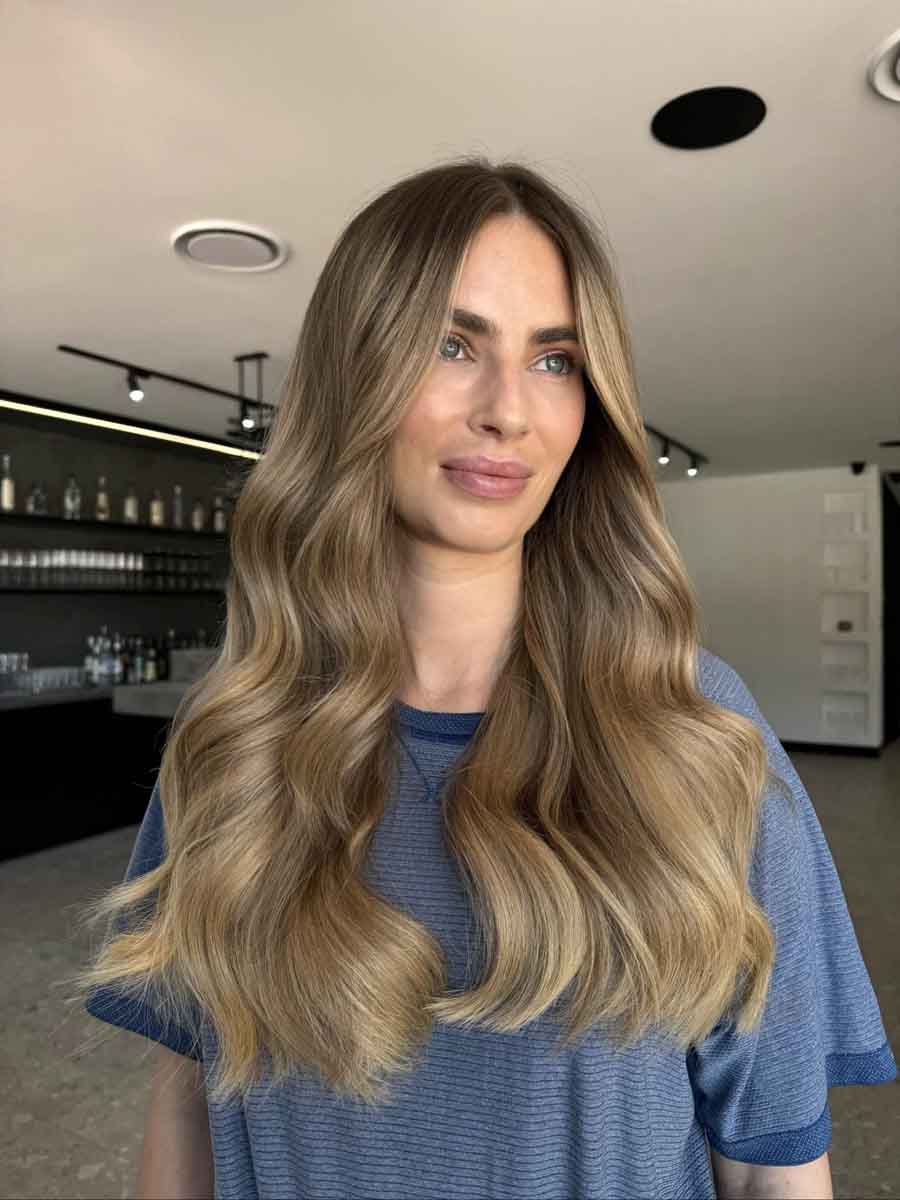
For women with natural texture, the dream of hair extensions has historically been fraught with frustration.
The market has long been dominated by pin-straight wefts, leaving those with curls, coils, or deep waves to face the “shelf” effect – where their natural curls sit awkwardly on top of straight extensions – or forcing them to spend hours with heat tools to force a blend.
This lack of inclusivity in the extension market has finally been challenged by a new wave of Master Extensionists who specialise in texture-matching as a core discipline.
The Texture-Matching Revolution Achieving a seamless blend with textured hair is one of the most difficult skills in the hairdressing industry. It requires more than just picking a “wavy” packet from a supplier’s catalogue.
True texture matching is a technical art form that begins with an understanding of the “curl diameter” and the “spring factor.”
A Master Extensionist must assess how much the hair will shrink when dry compared to when it is wet.
If the extension hair has a different spring factor than the natural hair, the two will separate throughout the day, ruining the illusion.
This is why sourcing premium European hair is non-negotiable for curly clients.
Because European hair is naturally responsive and high-quality, it can be sourced in various natural movements – from a subtle beach wave to a tight, bouncy curl – without the need for harsh perming chemicals that can degrade the hair’s integrity.
The Technical Secrets of Application When applying extensions to curly hair, the “tension” of the application must be adjusted.
Curly hair is more prone to dryness and can be more fragile at the root.
Methods like Beaded Wefts or Invisible Beads are ideal here because they distribute the weight of the extension over a wider area of the natural hair, preventing “traction” damage.
Furthermore, the “cut” is where the magic happens. Traditional extensionists are often trained to cut hair while it is straight to ensure a blunt, even line.
For curly extensions, this is a fatal error. A “dry cut” or textured blending session is required.
The stylist must cut into the extensions while they are in their natural curly state, “carving” the hair to ensure the layers of the extension interlock with the layers of the natural hair.
This ensures that when the hair dries naturally, the transition is invisible.
The Education-Led Care Routine Textured extensions require a specific, moisture-heavy care regime.
Unlike straight hair, the natural oils from the scalp have a harder time travelling down a curly hair shaft, and this is even more true for extensions.
Part of the luxury service is the “Education-Hub” approach, where the client is taught how to “scrunch,” “plop,” and diffuse their extensions to maintain the curl integrity.
Using performance-driven, sulfate-free products like Mr. Smith is essential.
These products provide the necessary hydration without the heavy silicones that can “weigh down” a curl, causing it to lose its bounce.
By focusing on the science of the curl and the health of the hair fibre, textured-haired women can finally achieve the volume and length they desire with a look that is authentically theirs.