
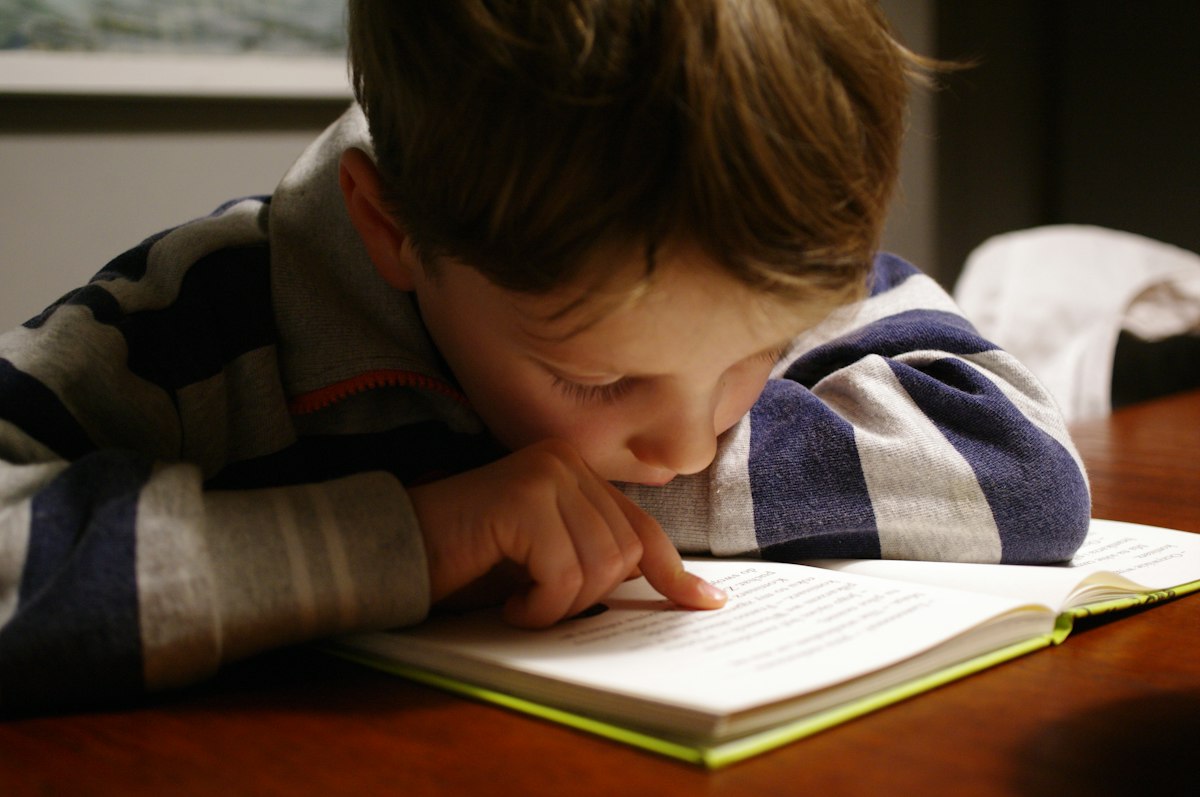
Learning to read takes time. Some children pick it up quickly, while others need a little longer to crack the code.
For children with dyslexia, reading and spelling can stay hard even with good teaching and plenty of practice. Spotting the signs early means support can start sooner.
Perth Speech Therapy is a Perth speech pathology practice that assesses children’s language and reading skills and offers therapy for dyslexia. It notes that screening and support can begin as early as kindy or pre-primary.
What dyslexia is
Dyslexia is a learning difficulty that mainly affects reading and spelling. It is not caused by low intelligence, poor eyesight or a lack of effort.
Many children with dyslexia have trouble with phonological awareness. This is the ability to hear and play with the sounds inside words. Linking those sounds to letters on a page can then be a real struggle.
Healthdirect has a plain-language overview of dyslexia, its signs and where to get help in Australia.
Signs in kindy and pre-primary
Before formal reading starts, some early signs may show up:
- Trouble learning nursery rhymes or hearing which words rhyme.
- Difficulty learning letter names and the sounds they make.
- Mixing up the order of sounds in longer words.
- Finding it hard to clap out the syllables in a word.
These signs don’t mean a child definitely has dyslexia. Young children vary a lot. They are still worth noting, especially if there is a family history of reading difficulties.
Signs in the early school years
As reading lessons begin, other signs may appear:
- Slow, effortful reading that doesn’t seem to get easier.
- Guessing words from the first letter or from the picture.
- Trouble sounding out simple words, or blending sounds together.
- Spelling the same word several different ways on one page.
- Avoiding reading, or getting upset at homework time.
Some children read aloud reasonably well but don’t take in what they’ve read. That is worth mentioning to their teacher too.
Signs in older primary children
By upper primary, children are expected to read to learn. A child with dyslexia might:
- Take much longer than classmates to finish reading tasks.
- Have great ideas when talking but struggle to get them onto paper.
- Find spelling tests very hard, even after lots of practice.
- Feel frustrated or embarrassed, or call themselves “dumb”.
That last point matters. Many children with reading difficulties lose confidence long before anyone works out why reading feels so hard.
Talking with the school
Your child’s teacher is a good first port of call. Ask how your child is going compared with the rest of the class, and whether they have noticed any of the same signs.
Schools often run their own reading checks. Ask what support might be available, such as small-group reading or extra time for some tasks.
How speech pathologists help
Reading is built on spoken language. That is why speech pathologists are often involved in supporting children with dyslexia.
An assessment may look at language skills, phonological awareness and reading comprehension. Therapy can then target sound awareness, decoding (sounding out words) and understanding what has been read.
At Perth Speech Therapy, approaches include Sounds Write, a synthetic phonics program, and Multi-sensory Structured Language Education, which uses hearing, seeing and movement together. Its speech pathologists also work with teachers, psychologists and parents, and offer strategies for home and the classroom.
Assessment and support for dyslexia often involves more than one professional. Your GP, your child’s school and a psychologist may all play a part alongside a speech pathologist.
Common myths about dyslexia
A few ideas about dyslexia come up again and again, and some of them can delay help.
One is that dyslexia is about seeing letters backwards. Many young children reverse letters like b and d while they are learning. Dyslexia is mostly about linking sounds and letters, and letter reversals alone don’t point to it.
Another is that children will simply grow out of it. Children with dyslexia can become good readers with the right support, but the difficulty with sounds and letters doesn’t usually go away by itself. Waiting and hoping can mean a child loses precious time and confidence.
A third is that a child needs to be a certain age before anything can be done. Support for early sound and language skills can start well before a child is reading.
Supporting homework without tears
Homework can be the hardest part of the day for a child who finds reading tough. A little planning can make it calmer.
Set up a quiet spot and a regular time. Break tasks into short chunks with small breaks in between.
You can read instructions aloud, or let your child dictate ideas while you write them down. If homework regularly takes far longer than it should, let the teacher know. They may be able to adjust what is set.
Ways to help at home
Small, regular habits help:
- Read to your child every day, even once they can read alone.
- Play sound games, such as “I spy something that starts with mmm”.
- Clap out the syllables in names and everyday words.
- Let your child listen to audiobooks so they can enjoy stories without the strain of decoding.
- Praise effort as much as results.
Keep reading time short and positive. Ten calm minutes beats a long battle at the kitchen table.
Look after their confidence
Children with dyslexia are often bright and creative. They may shine at sport, art, building or talking, even while reading feels hard.
Make room for the things they are good at. Remind them that brains learn to read in different ways, and that getting help is a normal part of learning.
It can also help to talk about famous people who have dyslexia. Knowing they are not the only one can take some of the sting out of a hard day.
When to take the next step
If reading still feels like an uphill battle after a term or two of good teaching, it is worth looking into further. The same goes for a child who is losing confidence or starting to avoid school.
Start with a chat to their teacher. Then consider a speech pathology assessment, which can give you a clearer picture of your child’s language and reading skills and where support could help most.